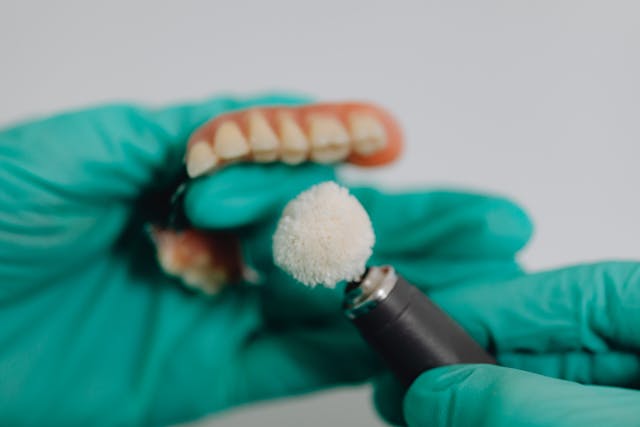
We all know how to care for our teeth, but do you know how to care for dentures?
If you have teeth missing and are considering dentures then it’s important to remember that you must look after them properly, just like your natural teeth. Dentures will last for years, but only with the right care, and we’re here to help with our full denture care guide.
How To Care For Dentures
As is the case with all dental procedures, your dentist will give you clear advice on how to care for dentures once they have been moulded for your gums. They will also likely discuss the maintenance of dentures when helping you to decide whether this restorative treatment is the right choice for you, and will keep in touch in the weeks following your procedure to answer any questions.
However, there are a few simple ways that you can care for your dentures each and every day to give yourself the best chance of a long-term smile!
1. Clean Your Dentures
The best piece of denture care advice that we can give you is to treat your dentures with the same care as you do your natural teeth. Just as plaque and tartar can cause issues for your teeth if not brushed away, so too can they damage your dentures, and we highly recommend cleaning them thoroughly at least twice a day to prevent tooth decay and bad breath.
To properly clean your dentures, simply brush away any food residue or plaque buildup gently with soft soap or a suitable, non-abrasive denture cleaner – NOT toothpaste, as this is abrasive against dentures. It is best to do this over a towel or a full sink in case they slip from your grasp, before flipping them over and gently brushing the surface that sits against your gums.
This is best done every morning and evening, but you can also clean your dentures in between meals by soaking them in cold water to rinse away any lingering food particles.
2. Keep your mouth clean
Missing teeth can cause many problems, such as difficulty speaking or eating, and since you’ve already gone through the hassle of losing teeth you certainly don’t want to lose any more!
You should keep your teeth as clean as possible by brushing them twice a day with fluoride toothpaste and keeping up your current oral hygiene routine. This should ideally include brushing your tongue and gums as well as your teeth, and flossing regularly, as dentures rely upon healthy gums to keep them in place. Swollen or receding gums won’t give your dentures the stability that they need, so keep an eye out for any evidence of swelling or bleeding gums, and let your dentist know if you are experiencing any pain or bad breath, as this may indicate gum disease.
3. Remove Your Dentures At Night
One of the first points your dentist will make when telling you how to care for dentures is to never wear them overnight. Sleeping with dentures in is obviously a choking hazard, but it can also increase the risk of damage to your teeth and dentures if food is trapped in them overnight.
Taking your dentures out before you go to bed also presents the opportunity to give them a little extra care each night by soaking them in water or a denture-cleaning solution. Doing so will clean them overnight and means that you have fresh, clean dentures waiting for you in the morning, ready for their first brush of the day!
4. Get Them Adjusted As Needed
Dentures are made to last for years with adequate care, but during that time they may become loose. This is not a cause for concern – our gums and jawbones shrink over time, particularly as we get older, and it is natural for them to change shape. However, since your dentures are fitted to your gums, if you do notice that they no longer fit properly then it’s time to have them adjusted.
Whilst ‘immediate dentures’ will need to be adjusted or replaced much earlier than other options (usually within the year), there is no set timeline for having dentures adjusted. Simply keep an eye out for these warning signs and get in touch with your dentist as soon as you notice them, especially if they start causing you discomfort or making it difficult to eat and speak.
5. Stay alert for any issues
It’s not just loose dentures that you need to be on the lookout for; it’s also these other indicators of damage:
- Cracks and chips.
- Missing crowns.
- Weak materials that seem likely to break.
- Broken parts, such as clasps.
- Dentures that click, slip, or move.
Dentures are fragile and become damaged easily, but they are also quickly repaired! If you have noticed any of these signs (or accidentally dropped them and heard the dreaded ‘crack!’) then we know just where to go.
How To Care For Dentures With Dentalia
No matter how well you care for your dentures, accidents can sometimes happen … but with Dentalia, you won’t have to be without them for long!
Thanks to their onsite Denture Studio, Dentalia is able to offer express denture repairs. With same day appointments available you could even have your dentures fixed on the very day that they break, so click here to book an express appointment and get your dentures back as soon as possible.